“The Wider Earth” at the Natural History Museum

Most peoples’ ideas about Charles Darwin, in part thanks to £10 notes, relate to an old, bearded figure of wisdom. The first clever move in this new play by David Morton is to focus on the younger Darwin – a far more approachable character – and tell the tale of his voyage on HMS Beagle when he was only 22. It’s an adventure story, if not quite swash-buckling, juggling excitement and information, aimed at those aged ten and up.

The story is supplemented with background debate on the subject of slavery and made weighty with a lot of discussion about Darwin and religion. Both topics are interesting and, of course, valid – but it makes that age guidance important. Some complicated arguments are laid out, and laid out well, but note that they are wordy and demanding. The “terrifying thought” of natural selection, again plotted competently, can’t carry much dramatic impact without the cultural context, and establishing a period feel could have been elaborated.

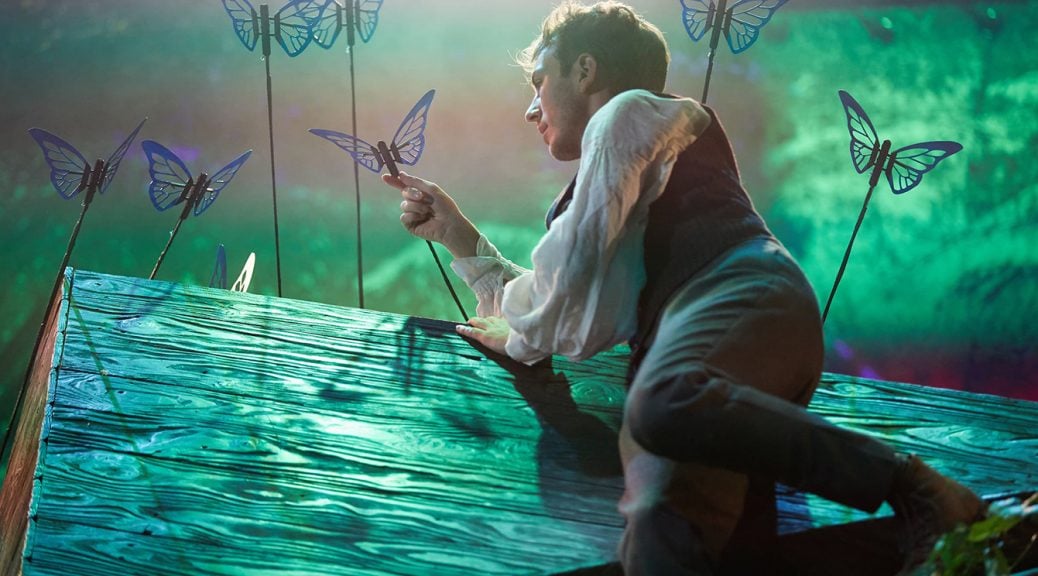
Hosting the show at the Natural History Museum, in a new, specially constructed theatre, makes for an appropriate setting rather than one the show actually uses: the production comes from Australia, via New York, and is clearly designed to travel. Morton, working alongside designer Aaron Barton, has a clever revolving set for his cast to climb around, and some excellent projections, making the production feel satisfyingly expensive. There’s a convincing sense of travel ­– appropriate to a story that circumnavigates the world – and, when the text allows, the action is swift.
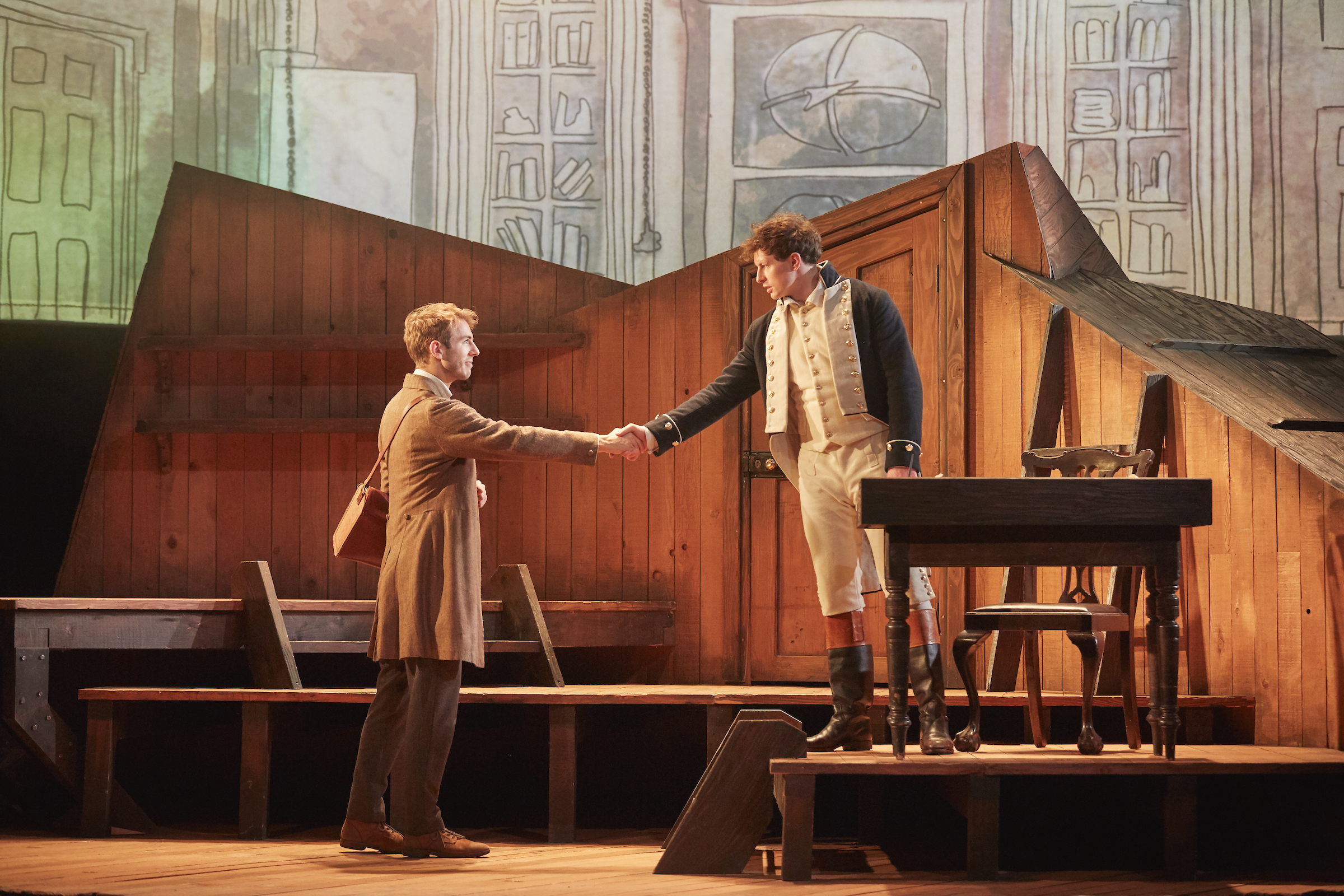
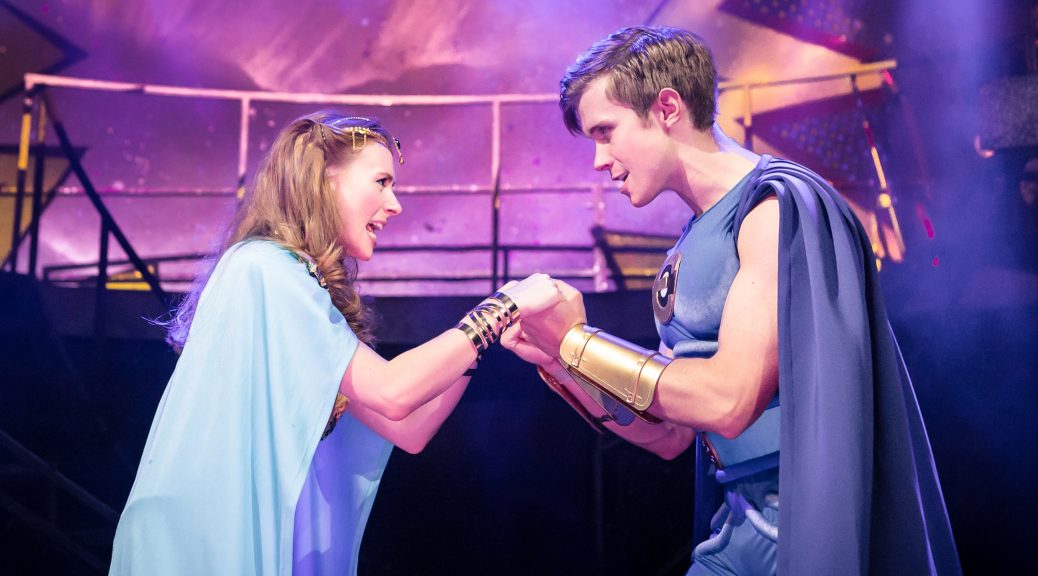
Bradley Foster and Jack Parry-Jones

As a director, Morton runs a tight ship and the cast is strong. Led by Bradley Foster, who makes an endearing Darwin throughout, there are strong turns from Melissa Vaughan as his fiancée Emma Wedgwood and Andrew Bridgmont as his tutor, John Stevens Henslow, both of whom have to tackle some vaguely patronising dialogue, presumably aimed at making Darwin relatable. The most interesting roles go to Jack Parry-Jones, as Captain FitzRoy, who manages to inject a good deal of tension, and Marcello Cruz as a missionary returning to his home of Tierra del Fuego in a fictional subplot that threatens to overwhelm that show at one point. Darwin cuts a rather impassive figure in too many scenes. There’s a frustratingly slim sense of the man. But thankfully, the true emphasis in the show is on a sense of wonder, which Foster continually captures. His amazement and confusion at the natural world inject a sense of investigation that could shape many a future career. Alongside the charming creations of the Dead Puppet Society, Darwin’s encounters with animals have a sense of wide-eyed fascination that is contagious and inspiring.

Until 24 February 2019

www.thewiderearth.com

Photos by Mark Douet

“Eugenius” at The Other Palace

Here’s yet another irreverent musical, this time taking comic books and their creators as its subject, full of tongue-in-cheek fun and aspiring to cult status. A transfer to the Ambassadors Theatre was announced and cancelled just today. Let’s hope the breaking news is just a postponement to future success. The show is primed to do well by Ian Talbot’s admirably ambitious direction, which ensures that Ben Adams and Chris Wilkins’ piece impresses. There’s plenty of enjoyment to be had, even if Eugenius is a tame affair that too gently pokes fun at theatre and heroics: it’s competent, entertaining and only just short of super.

Reservations arise not just because the piece is derivative, although you will probably recognise a lot of other shows that have inspired it. Adam and Wilkins’ book is a bit messy and the humour tepid. There’s a coming-of-age story that’s whisked to Hollywood just as it’s settling down, with a clumsy competition device where our hero’s unpublished comic is to be turned into a film. Then there’s a half-developed struggle for integrity before the fictional world of ‘Tough Man’ collides with reality to provide us with moral lessons. None of this is bad, although the lyrics are strictly functional, but it’s Talbot who powers the show.

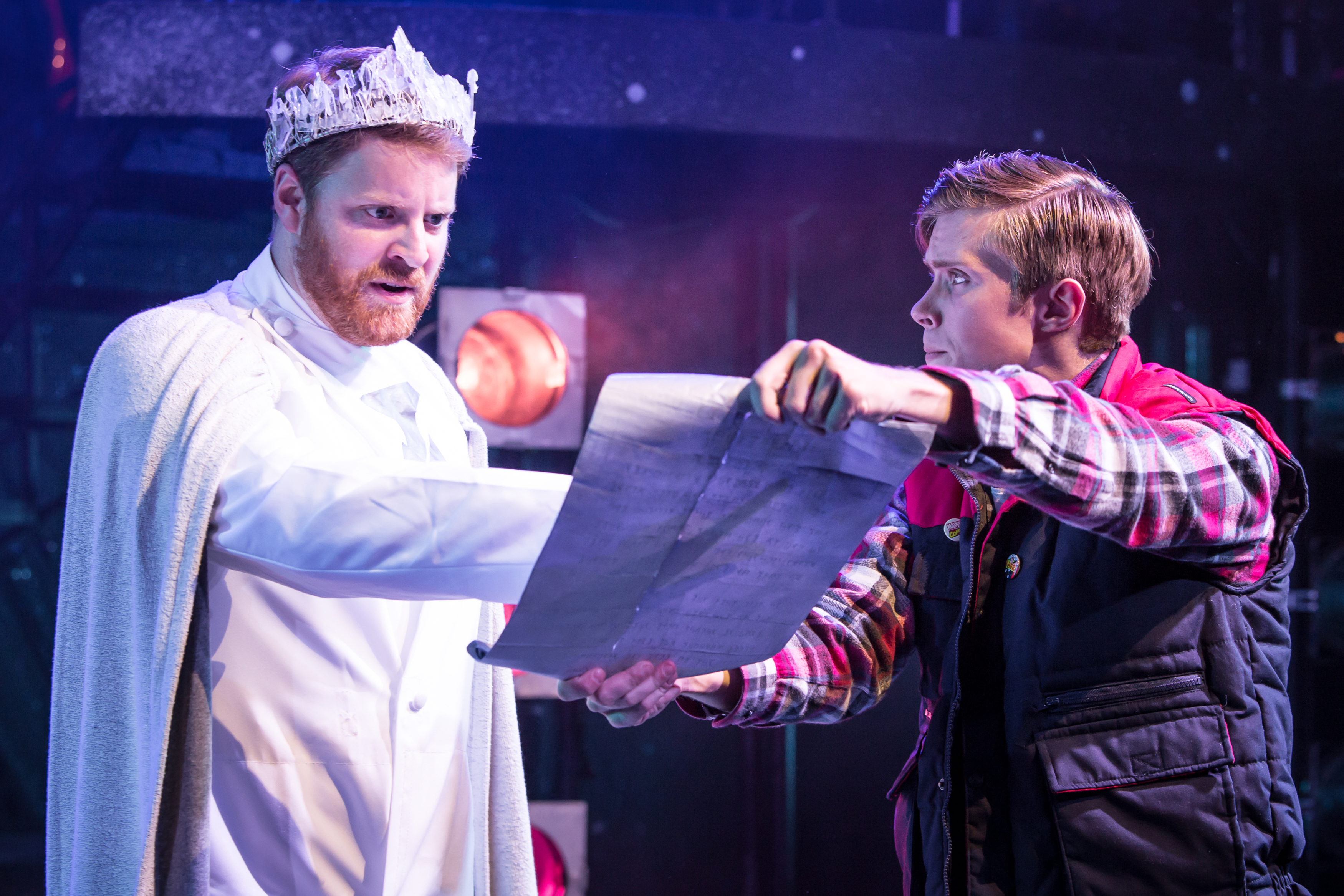
Christopher Ragland and Rob Houchen

Much is made of time and setting – America in 1988 – and the show cleverly cashes in on nostalgia. But the nudges to recollection are superficial, achieved by constantly throwing in references. There’s little effort to make the characters specific either. Their ages are a bit of puzzle and another niggle is ignoring how snobbish comic book geeks can be! It’s unbelievable that they would be so egalitarian with their references. Here it’s the performances that win out. Rob Houchen makes for an appealing lead as Eugene, likewise his love interest Janey and best friend Feris are engagingly performed by Laura Baldwin and Daniel Buckley. The whole cast gets the chance to shine with a lot of dual roles as Eugene’s fantasy connects with real life: Christopher Ragland and Simon Thomas both benefit.

It’s a shame that the love story in Eugenius is so predictable. Comics themselves have been challenging since before people started using the term heteronormative – so it’s odd to end up making fun of something more sophisticated than your own parody. The role of Janey is particularly unsatisfying, no matter how much irony is intended. Thankfully, when it comes to the most important thing – the music – Adams and Wilkins are on firmer ground. They can write a catchy tune and the score coheres well at several points. There’s a nice mix of pastiche and sincerity that offsets a lot of contrived moves. It may be a case of promise rather than something to rave about, but Eugenius deserves success.

Until 21 October 2018

www.eugeniusthemusical.com

Photos by Scott Rylander

“Pinter 1 & 2” at the Harold Pinter Theatre

Director Jamie Lloyd has an unerring ability to surround his projects with excitement. His latest scheme is to present short works by Harold Pinter in a six-month-long series of carefully curated and stylishly packaged shows (they really should sell a T-shirt). The project boasts an array of stars – young and old – which indicates that everyone wants to work with Lloyd and offers the chance to see rarely performed works.

The season – and Pinter 1 – get off to a bang courtesy of confetti cannons and Press Conference, which stars a commanding Jonjo O’Neill as a sinister politician. It sets the scene for a first half of plays that show a variety of dystopias. Sometimes the shorts come across as dated, too simplistic and full of conspiracy. Or should we see the paranoia as prescient? A Donald Trump impersonation in The Pres and an Officer, a newly discovered satirical skit, suggests Lloyd does.

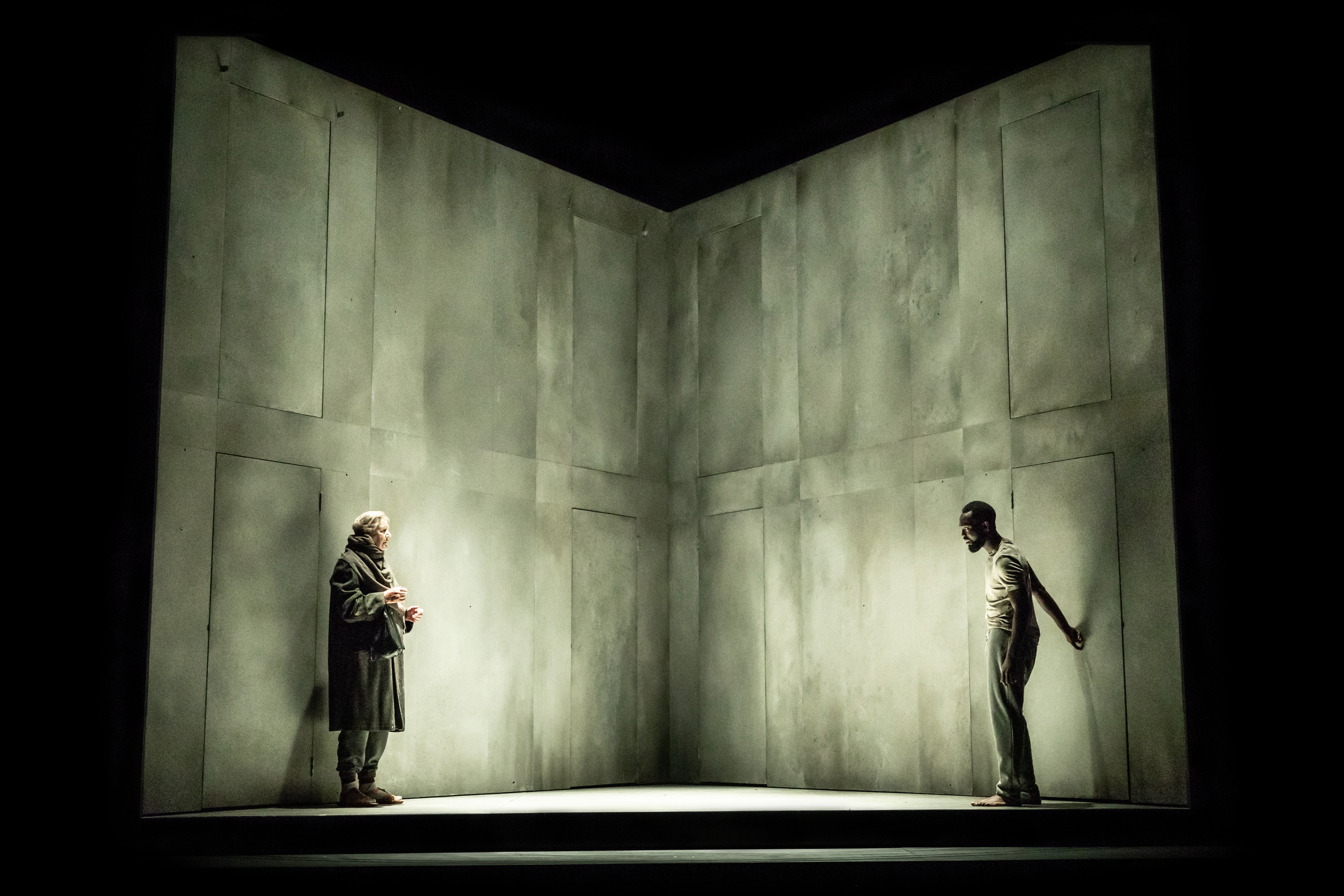
Maggie Steed and Paapa Essiedu

The way Pinter encapsulates the most basic fears surrounding the breakdown of society makes them raw and moving. Mountain Language reduced me to tears, with Maggie Steed as an elderly mother confronting her tortured son and forbidden to speak to him. And the tension Pinter can create becomes almost unbearable with One for the Road, which stars Antony Sher as a truly chilling interrogator, alongside Paapa Essiedu and Kate O’Flynn as his victims. The paranoia moves into a domestic setting for the evening’s finale, Ashes to Ashes, which sees a couple recounting an affair and an atrocity, both products of a deranged mind. It’s a too puzzling piece, held together by the direction of Lia Williams and passionate performances from O’Flynn and Essiedu.

Pinter 2 is a double bill of plays that look at infidelity, both from the 1960. First up is The Lover, where a squeaky clean couple discuss their affairs over breakfast and perform a bizarre role play. Surely this once appeared more challenging than it does today, and the point seems overplayed – even at just under an hour, the play drags. The boredom isn’t Lloyd’s fault – his direction is snappy and the whole show stylish thanks to the saturated colours of Soutra Gilmour’s designs. But while the piece is a comedy, the absurd is emphasised to a fault. Hayley Squires and John Macmillan perform well, but their characters are flattened, reduced to puppets. In fact, their shadows catch the eye more than they do (Elliot Griggs’ lighting design is superb).

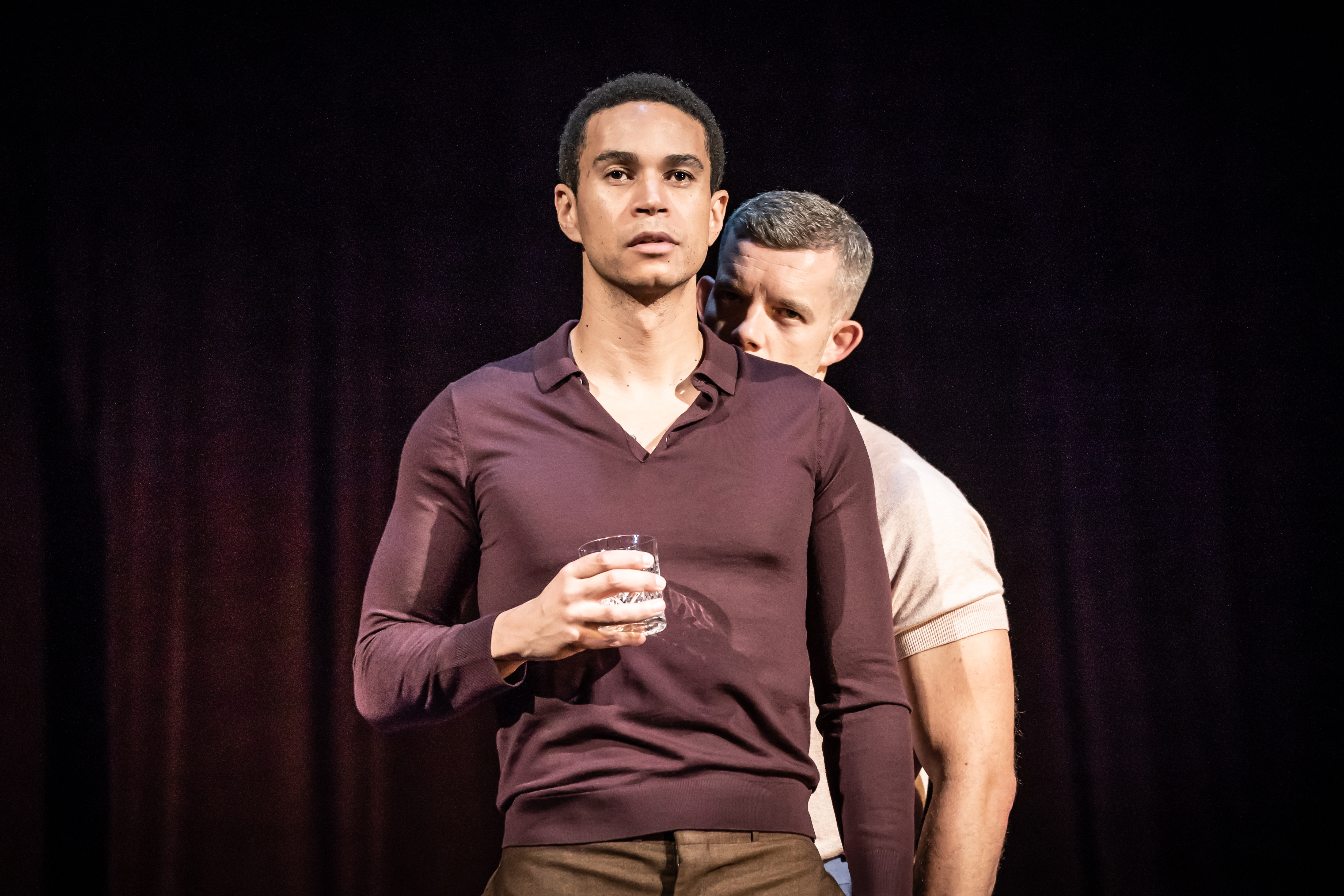
John Macmillan and Russell Tovey

This second evening improves a little with The Collection, where Squires and Macmillan benefit from meatier, if shorter, roles taking on another suspected affair and a confrontation between the husband and the man his wife says seduced her. Russell Tovey plays a wide boy who taunts the cuckolded Macmillan while his flatmate, David Suchet, looks on. Lloyd employs a broad brush again, and the cast clearly has fun, but a degree of tension is retained. The older man and his younger counterpart, from the slums it is said, make for a disconcerting mix of sex, class and violence that’s the real deal.


Until 20 October 2018

www.pinteratthepinter.com

Photos by Marc Brenner

“Wasted” at the Southwark Playhouse

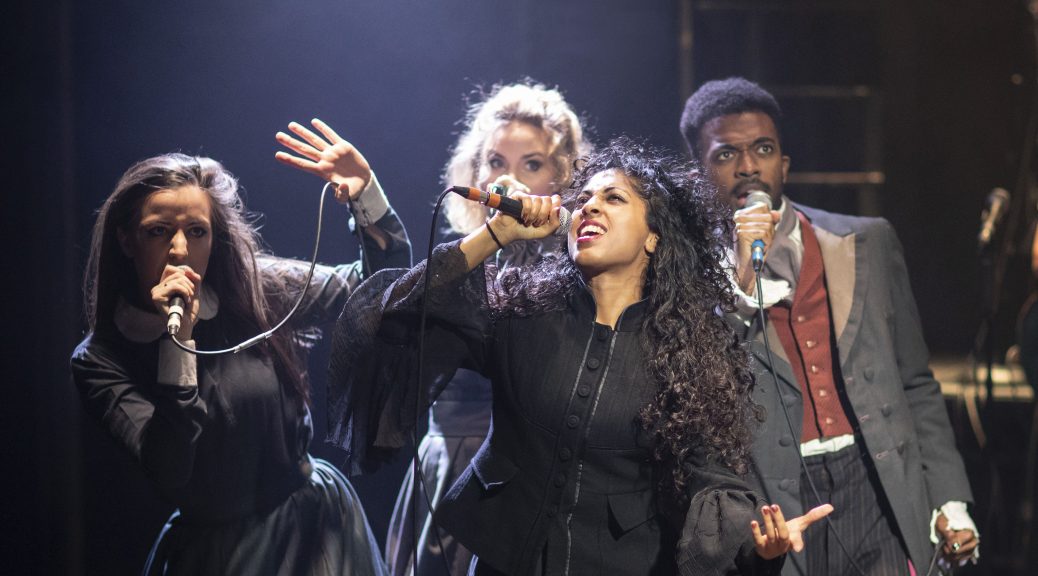
It’s not the fault of this strong show, a rock musical about the Brontë family, that it’s playing at the same time as another new piece called Six, which recasts the wives of Henry VIII as a pop group. Both musicals infuse history with a modern sensibility – and a lot of attitude – so maybe the more the merrier. To be clear, both shows are strong and exhibit exciting new promise from British talent, and comparisons shouldn’t be overstated as the pieces have different ambitions. But while Six is sharp and snappy, feeling like an exciting breakthrough, Wasted overreaches and comes a bit of a cropper.

The performances are all excellent. Natasha J Barnes takes the lead as Charlotte, dealing well with the clumsy flashback device of an interview and really belting out the songs. Molly Lynch is a prim and proper Anne, who also sounds great. Siobhan Athwal’s Emily, an eye-catching and committed mix of Kate Bush and Lady Gaga, proves hugely appealing. And the show has a lot of Branwell, performed with a deal of charisma by Matthew Jacobs Morgan. There’s some dissonance in the direction from Adam Lenson; it’s not quite clear how funny Wasted is supposed to be. Athwal gets a lot of laughs and Branwell is primed for them, yet the piece consistently veers towards gravity, even grimness.

There’s a great score from Christopher Ash. Heavy on rock, with plenty of passion delivered courtesy of Barnes and Lynch, with a bit of punk thrown in, Ash writes the best kind of pastiche. A comedy number for Emily recalls Kate Bush very cleverly while Jacobs Morgan’s smoother vocals are utilised well. Yet each song is just that little bit too long, too emphatic and too insistent. And Ash is not well served by the lyrics from Carl Miller, which seldom rise above the pedestrian. Miller gets a lot of information in, but there’s more prose than poetry here and attempts at humour are poor.

Tackling all four lives proves too much. It’s not that the show is too long but that Miller’s book becomes repetitive. The doom and gloom of the Brontës’ lives takes too much of the first act. And then they die. Fitting in a couple of songs about their work along the way is probably essential (although these are the weakest numbers). Presenting Branwell’s death as so literally a the result of his sisters’ success, then Emily’s collapse because of cruel critics, proves frustrating. Trying to tie all this together is the title – that the family saw their lives as wasted in one way or another – which isn’t quite enough. The show itself couldn’t be described as a waste in any way. But several ideas need reconsidering to give its subjects, and the talents of its cast and crew, a proper outing.

Until 6 October 2019

www.southwarkplayhouse.co.uk

Photo by Helen Maybanks

“The Human Voice” at the Gate Theatre

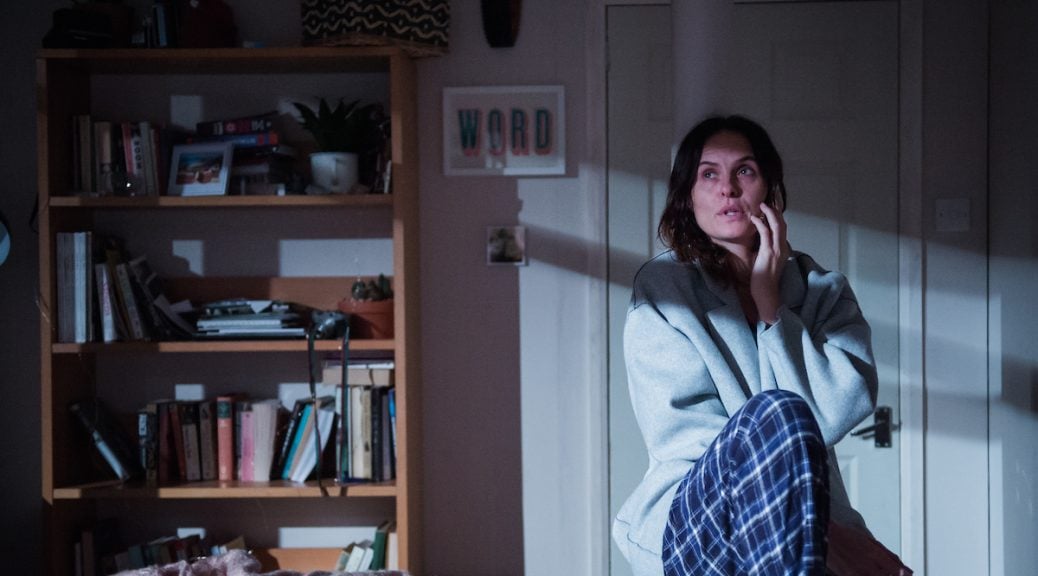
Sarah Beaton’s design for this new version of Jean Cocteau’s play sets the audience outside the action. We view the exterior of a woman’s flat and glimpse her inside; brilliantly conveying the piece’s novel construction and its theme of isolation. For The Human Voice is only half a conversation, a telephone call between two lovers breaking up when we hear only one. And although just half of the story is heard, that’s more than equal to making this show a must see.

Just how we hear the one-sided story is the production’s next smart move. Headphones are worn throughout by each audience member. Masterminded by Mike Winship, there’s a creepy quality to the technology. Simultaneously increasing intimacy, it also distances us: we can hear every breath, including recollections of the couple’s closest moments. But is this a crossed line we’re eavesdropping on? Or are we the person on the other end of the line being spoken to?

So far, so clever. Underneath these flashy touches is solid work on the text and direction – both from Daniel Raggett. A whole play with Cocteau’s concept, even if only an hour long, must pose peculiar problems, far more than a regular monologue, for its solo star. Tension is the key, a note taken by the performer Leanne Best, who plunges us into her character’s anxiety with frightening efficiency. When the call becomes interrupted, her panic is contagious. As lies and truths fall over one another, Best never loses her grip.

Raggett takes care not to overstress any modern updating to this 1930 play – he doesn’t need to, we’re surely all aware of our reliance on our phones – a temptation many theatre makers would fall for. To see the complications of the “invisible line” that the technology creates in such detail is salutary. To make a drama of such intensity, so full of forensic insight and fundamental truths, is exciting. High quality work all around – pick up your phone and book a ticket.

Until 6 October 2018

www.gatetheatre.co.uk

Photo by Ikin Yum

“Misty” at the Trafalgar Studios

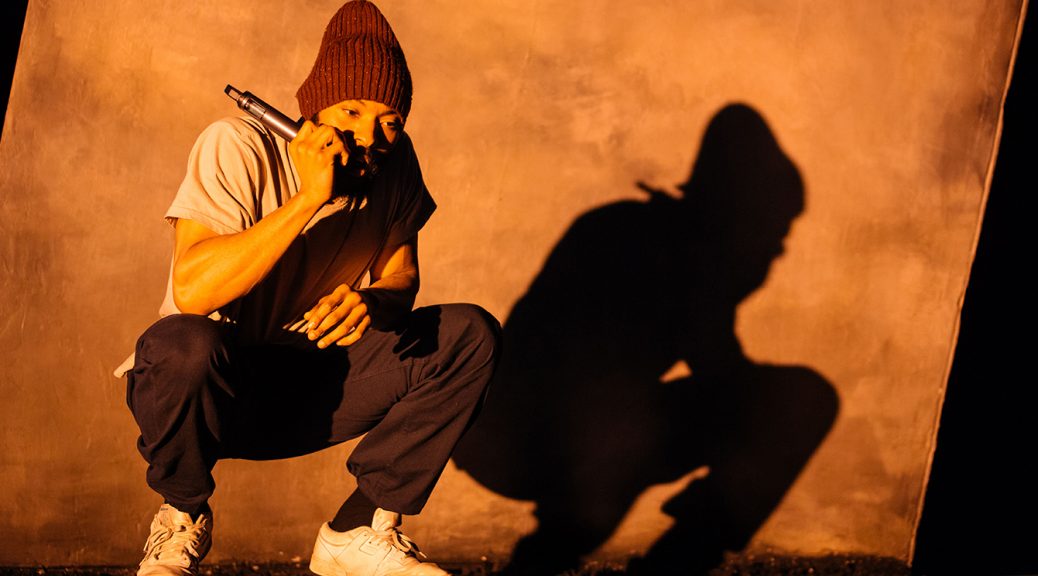
There are two sides to Arinzé Kene’s hit transfer from the Bush Theatre. It’s the story of a young criminal who attacks someone on a night bus. And it’s the story of Kene himself, writing the show and defending his art. While one character is on the run from the police and ruminating about the home he may be forced to leave, our author is questioning whether his story perpetuates stereotypes and angry at the responsibility writers of colour are burdened with. Mixing the stories together makes for an original work whose rave reviews testify to its popularity.

The show’s novelty, all the more impressive now that it’s in the West End, is to combine songs, poetry and spoken word. It’s called ‘gig theatre’, and director Omar Elerian deserves praise here, as it would be easy to feel lost. And designer Rajha Shakiry, working with lighting and video from Jackie Shemesh and Daniel Denton respectively, produces visuals worthy of any art gallery. Along with the singing and acting skills of Kene himself, there’s a suspicion that performance and production are slightly better than the play. No matter, as the show works superbly.

Misty is unmissable for its central performance: Kene has real star quality. This isn’t a one-man show, and there’s strong support from musicians Adrian McLeod and Shiloh Coke, who also appear as friends of the playwright. And a superb role for a child actor as Kene’s older sister (not sure why). But all eyes are on Kene and there’s seemingly nothing he can’t do, whether cry or laugh. His physicality is remarkable and his singing voice unique.

Back to that parallel narrative – the making of the play and the story itself. My preference was for the simpler. The tale of Kene’s intriguing friend is moving, in particular scenes imagined with his sister. When it comes to the process of making the play, the issues raised are valid and important. But that this introspection becomes anguished and intrusive – which is part of the point – is nonetheless frustrating. The traditional narrative could be developed so easily – omitted details are much needed – and it would have been great to see more. But that’s another demand on the writer, hopefully sincerely motivated on my part. Kene’s point is about artistic freedom and, given the achievement here, it’s difficult to argue with him.

Until 20 October 2018

www.bushtheatre.co.uk

Photo by Helen Murray.

“Eris” at the Bunker Theatre

Cormac Elliott does a fine job as the lead in John King’s new play. Elliott manages to hold the stage as an unappealing character called Seán, who searches for an unsuitable man to take to his sister’s wedding when his boyfriend, who he’s dumped anyway, isn’t invited. It’s a matter of taste about how sour you find this premise, but as a storyline it proves unfortunately unfruitful.

Airlock Theatre, under the direction of Robbie Taylor Hunt, tries hard to make the idea interesting. The ensemble use microphones to great effect and add a lot of physicality. All the cast take on multiple roles, which proves effective for scenes when Seán is on a dating app, or they join to perform as one, making the character of his nan a real highlight. Katherine Laheen and Clare McGrath both do well, Ashling O’Shea is poorly served as Seán’s best friend (a role surely ripe for satire), while Charlie Ferguson steals several scenes. It’s easy to enjoy the performances.

However, the best efforts of cast and crew struggle with King’s play. The jokes are old, tame and based on stereotypes. That titular Greek goddess of discord arrives too late and feels tacked on. By way of explaining the project, we’re told that “tolerance is not enough”: that the family should embrace Seán’s sexuality and whatever partner he chooses. A fair point, but the perils of self-righteousness that King documents deflate this aim. It’s difficult to bother about Seán, and I’m not prejudiced just because he uses his phone in the theatre…well, maybe a bit. His journey to embrace his feminine side, something that he’s been ashamed of, is interesting. But by the end, with his upstaging of the bride on her big day, Seán’s self-indulgence overpowers the play. This character is lucky to have got an invite anywhere, let alone a plus one.

Until 28 September 2018

www.bunkertheatre.com

Photo by Connor Harris

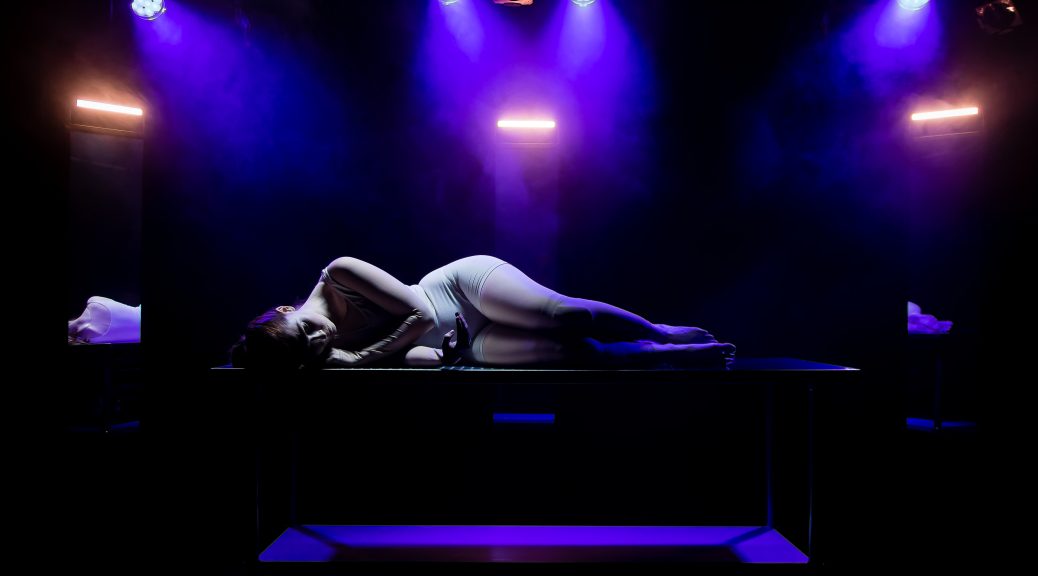
“Fabric” at the Soho Theatre

Abi Zakarian’s play is truly exciting – this is theatre that believes it can change minds and lives. Bravo, Damsel Productions! But let’s not forget that facilitating this is a behind-the-scenes team of considerable talent. The care taken to develop characters, on and off-stage, the precise plotting and structure – this is how you write a play – and Hannah Hauer-King’s direction are all impeccable. The solo performer, Nancy Sullivan, astounds with her passion and physicality… but don’t forget the technical ability it takes to cry your eyes out and not lose a line. Applause, please, for the craft on offer here.

Zakarian’s skill is to see a big picture and make her play of one woman’s story so thoroughly contextualised. This is the Holy Grail for many a political writer, and notoriously difficult. But with control and attention, which Hauer-King consistently nurtures, we understand that the title is inspired by the fabric of society. The structure of female lives, shaped and prepared for abuse, are the weft and warp we see woven before us in a depiction of systemic misogyny. To crib from Rozsika Parker, Zakarian creates a subversive tapestry for our consideration.

We follow Leah from her courtship through to marriage and then to a court case where she tries to prosecute her husband’s friend after he rapes her. But this final traumatic scene, depressing in its predictable futility, is presaged with drama and intelligence. The sickening moments of Leah in the witness box – when she comes into the audience itself – are a culmination of how she has been treated all along. There’s an uncomfortable link to the indebtedness her own family and mother-in-law expect her to feel at having found an eligible bachelor. And there’s a traumatic wedding night with her new husband that is very difficult to watch. The journey is handled adroitly. After presenting a gorgeously bubbly and endearing character at first, Sullivan deepens Leah’s appeal with great observations and carefully balanced humour. Yet voiceovers alert us that something has gone wrong, and tension mounts ferociously.

Rips, tears and bodily fluids stain the perfect life Leah aims for, using dresses she wears on key occasions as metaphors, building a sense of menace and highlighting that, for women, presentation becomes a constant burden. As Leah’s life unravels, how the pressures and punishments of expectations and prejudice enwrap her become literal; her clothing is used as evidence in court. Fabric reports on the state of things with magnificent insight. But there is, thankfully, an optimism in the ability to unpick and expose, as the talented women who have made this play have done. With threads loosened, there is the chance to breath and await what will be woven anew.

Until 22 September 2018

www.sohotheatre.com

Photo by The Other Richard

“Eastern Star” at the Tara Theatre

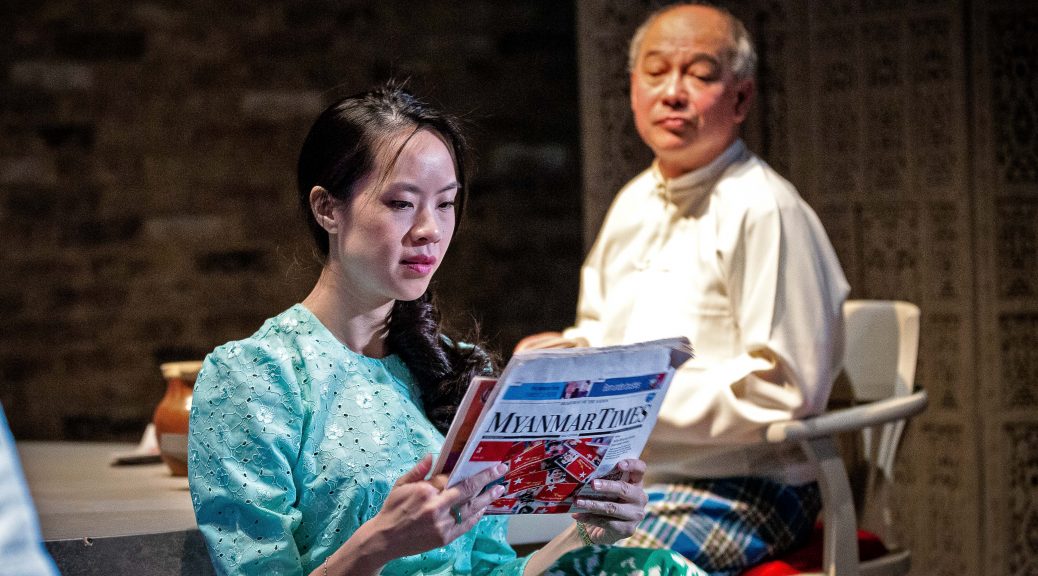
Guy Slater’s new play makes for an informative history lesson about Myanmar. The country is in the news and the theatre is dedicating the run to Wa Lone and Kyaw Soe Oo, currently imprisoned in Yangon. But this piece struggles to make a drama out of the past or to make current events seem urgent. Fighting to introduce the personal into the political, Eastern Star ends up being a dull play about an important subject.

This is the true story of BBC journalist Christopher Gunness and his source during the protests of 1988, a man whose code name gives the play its title. The men are reunited after 25 years, and it seems we are supposed to be shocked that they have led different lives. In order to fill us in on events, in scene after scene, characters display disbelief that living under military rule or going to prison for 16 years is not… nice.

The experienced cast does well enough to convey the heavy issues, despite the clumsy script (I’ve no doubt a couple of press night stumbles will be ironed out quickly). But Michael Lumsden, who plays the now lauded former reporter, has to portray a character who becomes tiring. The possibility that he inadvertently revealed Eastern Star’s identity to the authorities is drawn out with prolonged hand-wringing in a failed attempt to create tension. David Yip takes the title role, aka U Nay Min, and does well to convey the trauma and anger of his character – that of the “silent architect” of popular protest now written out of history.

What the people of Myanmar know about their history could be explored more. Slater provides the device, a niece who now hears her uncle’s story, capably performed by Julie Cheung-Inhin. But we need more of her to stop the role becoming patronising: we only get generic comments about a younger generation. The play suffers from repetition and it is only Slater’s firm direction, notably more proficient that his text, that gives any pace.

It’s not that Eastern Star doesn’t provide food for thought. But the conservative structure and dialogue are tiresome. Lumsden has to deal with a lot of journalese, there seems little difference between his everyday speech and flashbacks of his reporting. It’s clear we’re in trouble from the start when he returns to Myanmar to settle “unfinished business”, surely a phrase better suited to a Hollywood movie. Like many of the clichéd efforts to inject excitement, Slater doesn’t just fail, he frustrates his play’s worthy aims.

Until 29 September 2018

www.tara-arts.com

Photo by Brendan Foster.

“Dust” at the Trafalgar Studios

It’s peculiar to see a play that is powerful, deals with important issues and is brilliantly performed yet still requires that people should think seriously before watching it. But dealing with suicide in such a frank, indeed brutal, manner, no matter how well intentioned this project from Millie Thomas and her director Sara Joyce is, needs to be approached with caution.

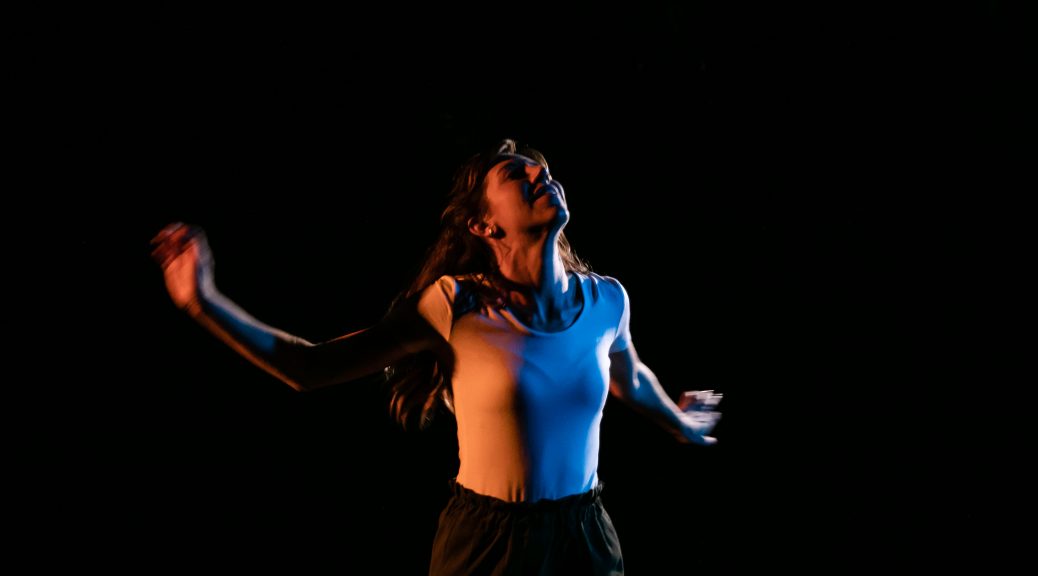
Thomas is both writer and performer. As the former, her device is to present the character of Alice, who after a long battle with mental health has taken her own life, as a ghost. The idea stumbles at times; so close to some existential thought experiment it proves a distraction. Alice’s increasing confusion about her state forms an oppressive undertow to the play. But using the suicide’s frequent fantasy dispels the myth that people are seriously motivated by selfishness or a form of revenge when they act so desperately. And Thomas’s characterisation is carefully planned – Alice is not a sympathetic creation. A touch too generic a Millennial, she shocks with her sexual frankness and is basically spoilt. Care is taken avoid any “reason” for Alice’s depression – there’s no backstory of trauma or tensions in her young life. It’s a lesson I wish I’d been taught years ago as I struggled not to dismiss the condition of a bright and beautiful friend with no “cause” to suffer. A wicked sense of humour and intelligence aren’t enough to stop you being angry at Alice. It all adds up to a performance that is uncomfortable and confrontational. Joyce embraces the fits and starts in the script, making Dust remarkably unforgiving and consistently interesting.

It is as a performer that Thomas truly excels. Taking on the roles of friends and family who Alice visits, she switches genders and ages with astonishing speed. We instantly know which character she is depicting. The delivery is faultless. It’s only at the end that Thomas’s judgement might be questioned. After reliving the tragedy from not one but multiple perspectives – with so much sadness and anger it is exhausting – Thomas cuts short the clapping to appeal for The Samaritans. In keeping with her spirit, here’s a link. But Thomas is wrong to curtail the applause for herself – I’ve seldom seen a performance that deserves it more.

Until 13 October 2018

www.atgtickets.com

Photo by Richard Southgate